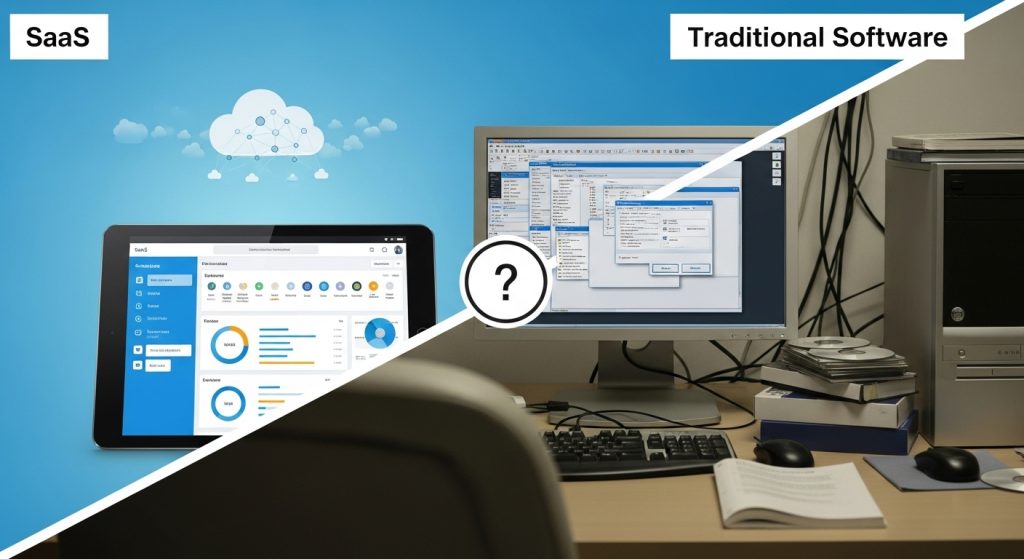
There’s a quiet revolution happening in the software world — and it’s all about how you pay.
For years, businesses bought software once and used it for years. But today, Software-as-a-Service (SaaS) has replaced upfront licensing with flexible subscriptions. The question is: which one makes sense for you?
The Traditional Software Model
Traditional software means buying a license outright — think Microsoft Office 2010 or Photoshop CS6. You pay once, install it locally, and use it indefinitely.
Pros:
- One-time cost
- Full control over updates
- Works offline
Cons:
- No ongoing updates or support
- Compatibility issues over time
- Upgrades require repurchasing
The SaaS Advantage
SaaS platforms like Google Workspace, Notion, or Adobe Creative Cloud live online, updating automatically and offering flexible pricing tiers.
Pros:
- Always up to date
- Accessible anywhere
- Scales with your business
- Low upfront cost
Cons:
- Requires internet access
- Subscription costs add up over time
The Hybrid Future
Many companies now blend the two models — offering desktop versions synced with cloud access. This gives users stability and flexibility.
Making the Right Choice
For small businesses, SaaS is often the smarter move — lower costs, easier collaboration, and less IT maintenance. For enterprises with strict compliance or offline needs, traditional software may still win.
Call to Action:
Still on the fence? Try free SaaS trials like ClickUp, Notion, or Adobe Creative Cloud and experience the flexibility of subscription-based software for yourself.